

Commercial cleaning in New Zealand is a substantial and dynamic industry that plays a vital role in maintaining hygienic, safe, and presentable environments across a wide range of commercial sectors. Valued at around $2.9 billion in 2024, this sector has steadily grown in response to increasing urbanisation, higher standards of workplace health and safety, and the expanding corporate and institutional infrastructure across the country. From office buildings, retail outlets, and healthcare facilities to educational institutions and hospitality venues, commercial cleaning services provide essential support to businesses by delivering thorough cleaning, specialised sanitation, and maintenance services.
The industry encompasses a broad spectrum of services, including interior building cleaning, washroom sanitation, window and exterior building cleaning, and specialised services such as carpet and floor maintenance. Interior building cleaning remains the largest segment within the commercial cleaning market, involving routine tasks like dusting, vacuuming, waste disposal, and surface sanitisation. These activities are critical for creating healthier, more productive workplaces and public spaces, reducing the risk of illness, and enhancing overall customer and employee satisfaction.
The growth of commercial cleaning in New Zealand is being propelled by several key factors. Firstly, increased awareness of hygiene standards, especially heightened by the COVID-19 pandemic, has led to more stringent cleaning protocols in commercial premises. Businesses now prioritise regular disinfection and deep cleaning to protect staff, customers, and visitors from infection and contamination. Secondly, strong demand from healthcare facilities, including hospitals and aged care homes, which require meticulous cleaning to meet strict health regulations, contributes significantly to the industry’s revenue. Additionally, the resurgence of construction and real estate development after earlier slowdowns is expanding the demand for cleaning services in newly built commercial and public buildings.
Technological advancements have profoundly impacted the commercial cleaning landscape in New Zealand. Many companies are incorporating robotics, automation, and eco-friendly products into their service offerings. Self-guided robotic cleaners are increasingly utilised to complement human cleaning crews by managing large floor areas and performing repetitive tasks with high efficiency and consistency. These robots feature integrated sensors and mapping technology that collect data on foot traffic and cleaning patterns, enabling optimisation of cleaning schedules and resource deployment. Such innovations not only enhance cleaning quality and reduce labour costs but also align with the government and public’s growing commitment to sustainable and environmentally responsible business practices.
Environmental sustainability remains a core concern within the industry, with many cleaning providers adopting green cleaning solutions. These include the use of biodegradable detergents, reduced water consumption methods, and energy-efficient equipment. New Zealand commercial cleaning companies often work closely with clients to develop tailored cleaning programs that minimise environmental impact while maintaining high hygiene standards. This focus on sustainability supports broader national goals around climate change mitigation and resonates well with eco-conscious customers.
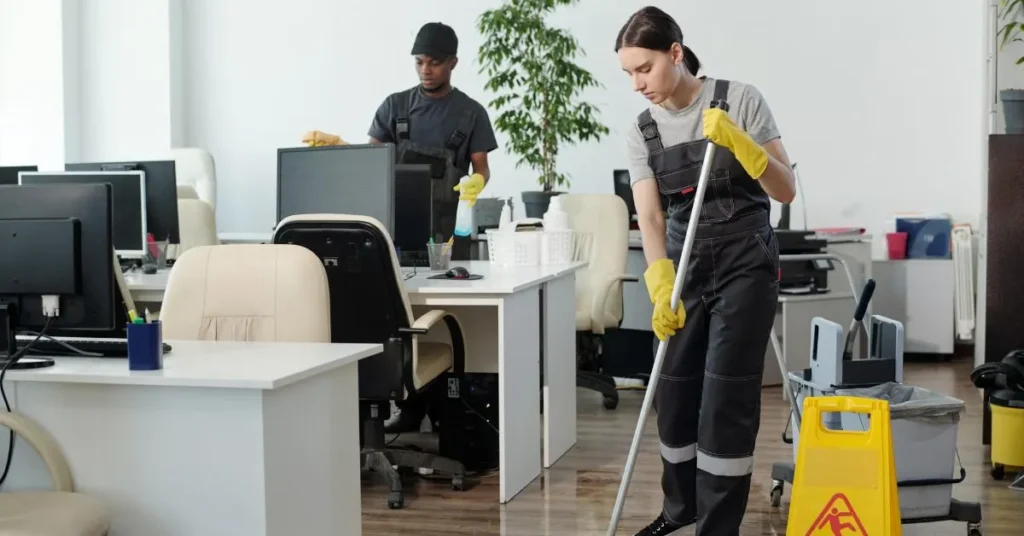
The competitive landscape of commercial cleaning services in New Zealand is intense and diverse. The market has thousands of operators ranging from small businesses to large multinational firms. Market leaders such as OCS, Downer, and Paramount Services hold significant market shares and often serve large contracts spanning multiple locations and sectors. Smaller and mid-sized companies differentiate themselves through specialised services, personalised client relations, or innovative cleaning technologies. Quality assurance, reliability, security vetting of staff, and health and safety compliance are critical success factors in this highly service-oriented industry.
Customer expectations in the New Zealand commercial cleaning sector revolve around consistency, thoroughness, and professionalism. Clients expect cleaning teams to deliver services with minimal disruption to business activities, adhering strictly to agreed schedules and safety protocols. Many commercial cleaning companies employ trained, vetted, and uniformed staff to ensure a professional image and trustworthy service. Additionally, digital tools such as client portals and service tracking software boost transparency and communication, allowing clients to monitor cleaning activities and provide feedback in real time.
Regulatory compliance plays an important role in the commercial cleaning industry. New Zealand’s Health and Safety at Work Act 2015 places responsibilities on employers to provide safe environments, making regular cleaning and sanitation crucial preventive measures. Cleaning companies must also comply with environmental regulations regarding waste disposal, chemical handling, and emissions. Some commercial sectors, such as healthcare and food processing, require specialised cleaning protocols compliant with additional legal standards and audits.
Beyond routine cleaning, many New Zealand commercial cleaning providers offer ancillary services such as pest control, waste management, and facility maintenance, delivering integrated solutions that help clients streamline building management. This service diversification increases business resilience and client satisfaction by fulfilling a wider range of facility upkeep needs under one contract.
In terms of workforce dynamics, the commercial cleaning sector provides employment for over 27,000 people across New Zealand. The industry attracts a diverse labour force, including part-time workers, migrants, and those seeking flexible work hours. Given the physically demanding nature of cleaning work, continuous training on occupational health and safety, the use of protective equipment, and ergonomics is common to reduce injury rates and sustain a motivated workforce.


Kevin Martin
It has survived not only five centuries, but also the leap into electronic typesetting unchanged. It was popularised in the sheets containing lorem ipsum is simply free text.
Martin Jessica
It has survived not only five centuries, but also the leap into electronic typesetting unchanged. It was popularised in the sheets containing lorem ipsum is simply free text.